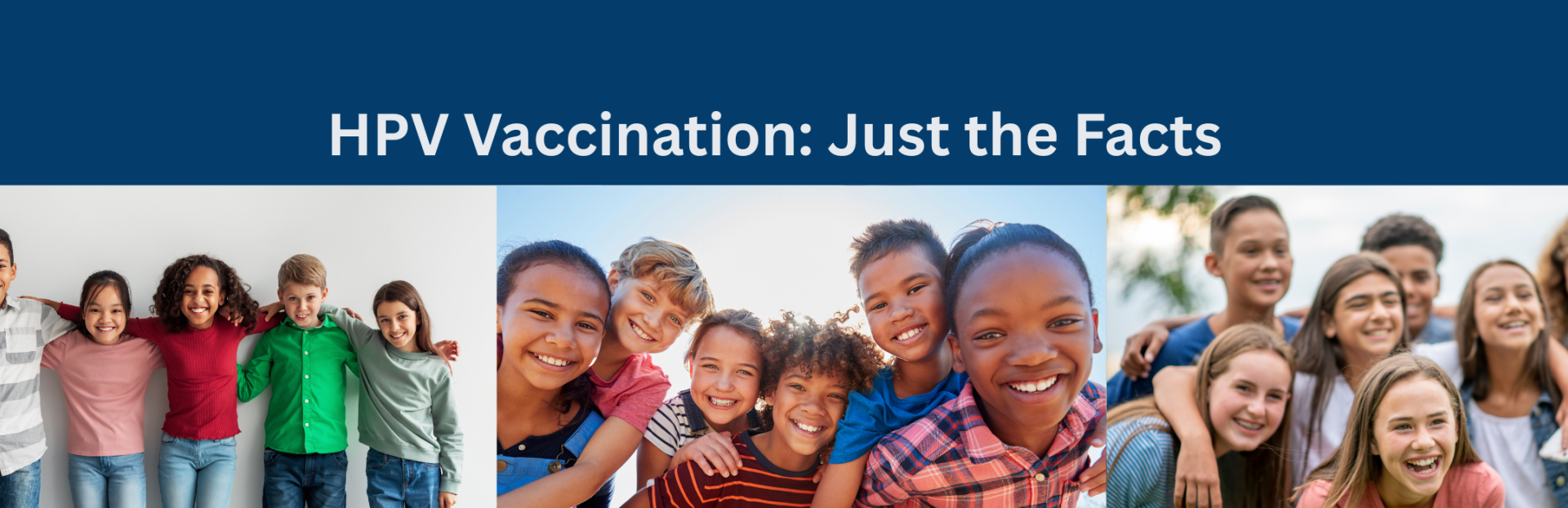
HPV Vaccination: Just the Facts

View the HPV Vaccination: Just the Fact Brochure Here
HPV Vaccination:
Just the Facts
HPV vaccination is cancer prevention.
HPV is short for human papillomavirus, a common virus that can cause cancer in some people. Almost 35,000 men and women in the US are diagnosed with a cancer caused by HPV each year. HPV vaccination can prevent most of these cancers.
The HPV vaccine is for boys and girls.
HPV vaccination is strongly recommended for boys and girls. The vaccine helps protect boys from cancers of the throat, penis, and anus later in life. It helps protect girls from cancers of the cervix, throat, vagina, vulva, and anus later in life.
HPV vaccination works best when given between ages 9 and 12.
Vaccination between ages 9 and 12 will prevent more HPV cancers than vaccination at older ages. Children must be vaccinated before they’re exposed to an infection – just like tetanus or pneumonia. HPV is so common that most people will catch it at some point in their lives. That’s why all 9- to 12-year-olds need the HPV vaccine.
Children and young adults age 13 through 26 who have not been vaccinated, or who haven’t gotten all their doses, should get the vaccine as soon as possible for the most cancer protection.
The HPV vaccine is effective.
HPV vaccination works very well. Research shows that it can prevent more than 90% of HPV cancers when given at the recommended ages.
HPV vaccination is safe.
More than 270 million doses have been distributed around the world since 2006, and safety studies continue to show that HPV vaccination is safe. Like any vaccine or medicine, the HPV vaccine can cause side effects. Common side effects are mild and can include headache, pain, and soreness in the arm where the vaccine is given.
The HPV vaccine does NOT contain harmful ingredients.
The HPV vaccine contains ingredients that have been proven to be safe. Parents who are concerned about vaccine ingredients may be worried about aluminum. People are exposed to aluminum every day through food and cooking utensils. Aluminum-containing vaccines have been used for decades and have been given to more than 1 billion people without problems.
The HPV vaccine does NOT cause fertility issues.
No scientific studies show that getting the vaccine will have a negative effect on future fertility. Getting vaccinated helps protect against cervical cancer and can help ensure a woman’s ability to get pregnant and have healthy babies.
Get more information
about HPV cancers and the vaccine at cancer.org/hpv.
This tool was supported in part by Centers for Disease Control and Prevention Cooperative Agreement Number NH23IP000953-03.
©2020, American Cancer Society, Inc. No. 080325 Rev. 5/20
Models used for illustrative purposes only.