
What Happens After You Reach Out for Mental Health Support?
September is Suicide Prevention and Awareness Month, a time to encourage conversations about mental health and help people understand where support can lead.
For an older adult who is struggling, reaching out may begin with a call to 988, a conversation with a family member, an appointment with a primary care provider or a
referral to a mental health program. A common question often follows:
WHAT HAPPENS NEXT?
The answer depends on the person’s immediate safety, health needs, support system and available services. In many cases, care begins with a conversation, an assessment and a plan for continued support. Understanding these steps can reduce some of the uncertainty surrounding mental health care.
SAFETY COMES FIRST
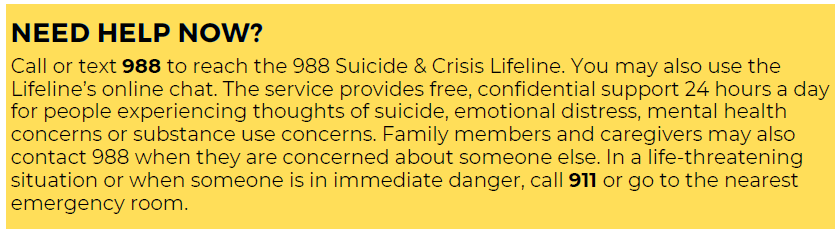
When someone contacts 988, a counselor will ask whether the person is safe. The counselor will then listen, learn more about what is happening and help identify resources that may be useful.
A similar process may occur when someone speaks with a physician, therapist, emergency department clinician or mental health program. The health care professional
may ask about the person’s mood, current thoughts of suicide, recent changes in daily life, past mental health care, physical health, medications, sleep, alcohol or drug use and sources of support.
These questions help the care team understand the urgency of the situation and determine which services may be appropriate. A medical review can be especially
important for older adults because certain health conditions and medications can contribute to symptoms of depression.
988 counselors aim to provide support in the least restrictive manner available. They often work with the person during the call, text or chat to reduce distress and develop a plan for safety. Emergency services may become involved when an immediate physical safety threat exists.
IDENTIFYING THE APPROPRIATE LEVEL OF SUPPORT
The next step will depend on the assessment. Some people may be able to remain at home with a safety plan, support from family or friends and a prompt outpatient
appointment. Others may need evaluation by a mobile crisis team, an emergency department or a crisis stabilization service.
A higher level of care may be recommended when someone needs close monitoring to remain safe. This could include a crisis stabilization program or an inpatient hospital stay. Once immediate safety has been addressed, structured outpatient care may help the person continue treatment and build skills for managing future challenges.
Behavioral health crisis care can involve several connected services, including crisis counseling, emergency evaluation, outpatient treatment, partial hospitalization and intensive outpatient programs. Continued coordination helps the person move from immediate stabilization into ongoing care.
CONTINUED CARE
A mental health crisis may be connected to several concerns at once. An older adult could be coping with grief, chronic pain, a new medical diagnosis, reduced independence, financial stress, loneliness, caregiving responsibilities or changes in living arrangements.
Depression and other mental health conditions can be treated at any age. Counseling, medication or a combination of treatments may be recommended based on the
individual’s health, symptoms and preferences.
Treatment plans may change as the person’s symptoms, daily functioning and goals change. Patients and families can help by sharing concerns about side effects,
transportation barriers, appointment schedules or other issues that could affect participation in care.